
A connected generation
Almost all children and teenagers are connected. Our most recent Children’s Omnibus which surveys 7-18-year-olds in Wales found that over three quarters (76%) of children have a mobile phone. This rises to almost universal coverage among 11-15-year-olds (94%) and 16–18-year-olds (95%). Although younger children aged 7-10 are much less likely to personally have a mobile (39%), 89% of them still access the internet at least once a week. It’s a regular habit for young people today, but what are they doing on phones?
Entertainment to social connection
Well, of children who have a mobile phone, the top three usage behaviours include playing games (77%), listening to music (75%), and messaging family to let them know their location (71%). However, when broken down by age groups, the patterns of usage start to differ.
Media habits among 7-10-year-olds and 11-15-year-olds align with the overall scores, with the same three reasons ranked as the top three, suggesting that entertainment-related activities remain an important part of mobile phone use during childhood, alongside practical family communication.
The shift starts to appear among 16-18-year-olds, where the top scoring behaviours show a couple of differences. Staying in touch with friends on social media (84%) and making phone calls (81%) emerge into the top three, followed by listening to music (81%).
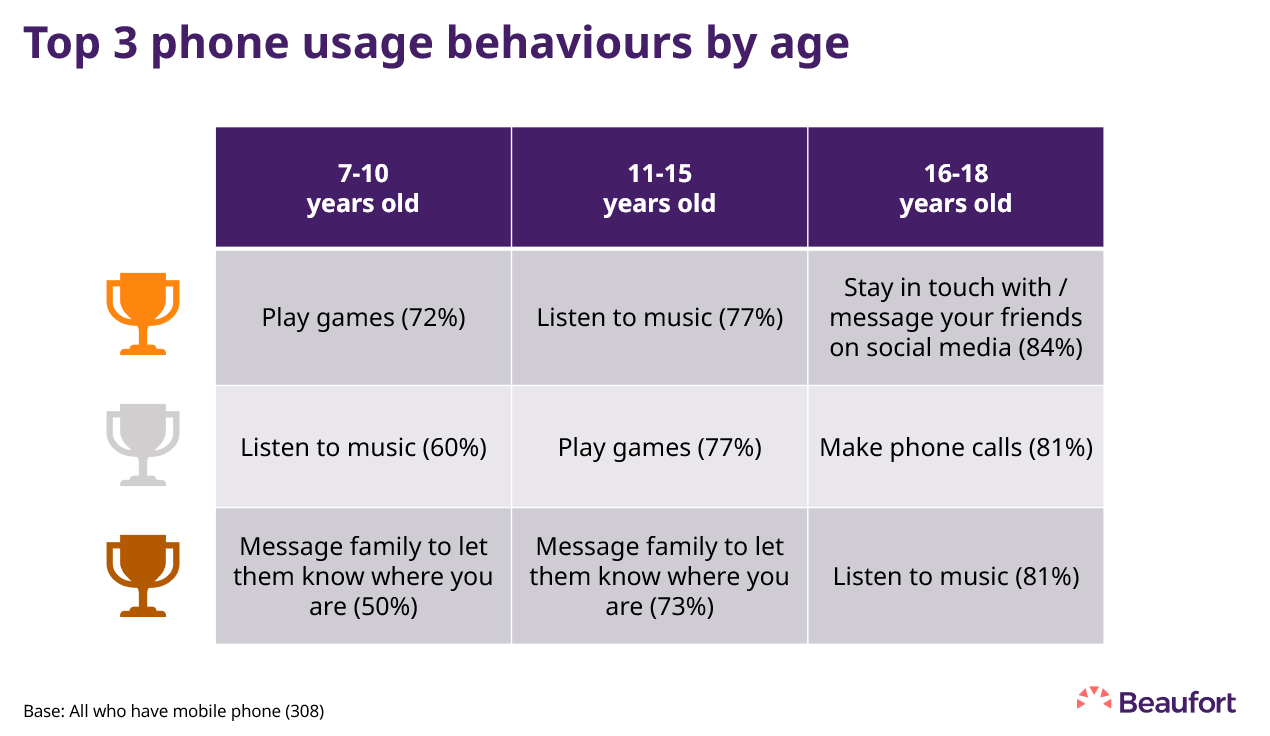
Rather than simply spending more time online, the findings illustrate that the purpose of digital engagement may change as children get older, shifting from entertainment and family communication towards maintaining friendships and social connections.
How age interacts with platform preferences
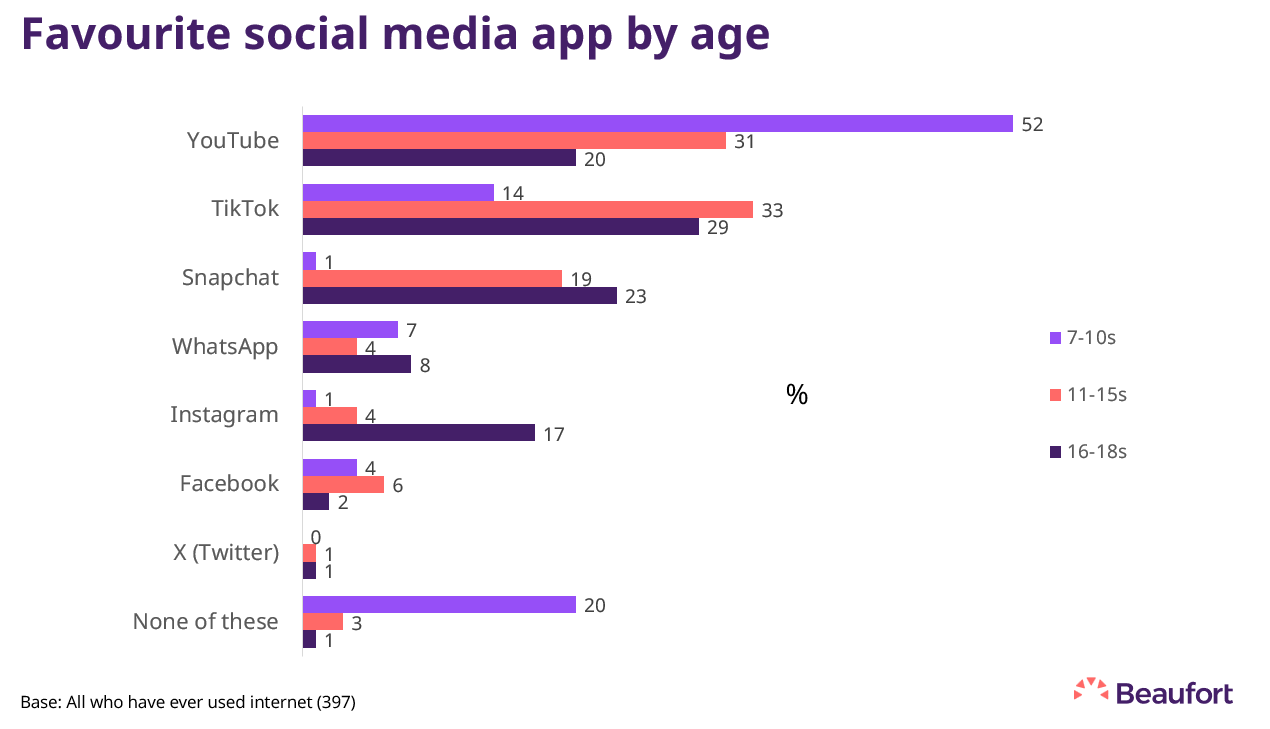
This pattern becomes more evident in children's preferred social media apps. Video-based platforms, namely YouTube and TikTok, were the most popular apps based on the overall sample.
Over half (52%) of 7-10-year-olds reported that YouTube was their preferred app, whereas TikTok was the most popular app among both 11-15-year-olds (33%) and 16-18-year-olds (29%). However, platforms centred more on interaction and communication become more prominent favourites among older children. Snapchat (23%) and Instagram (17%) were more commonly cited by 16-18-year-olds, highlighting how digital behaviours vary across different stages of childhood.
What does this mean for the social media ban?
These findings are particularly relevant considering the UK Government's planned restrictions on social media use for under-16s, which are expected to come into force in Spring 2027.
Public debate may often feel like children and teenagers are treated as a single connected generation. However, Beaufort’s latest data suggests that digital behaviours are more nuanced throughout adolescence.
Understanding the differences may be important when considering how any future restrictions are experienced by young people themselves.
How do children themselves feel about the proposed restrictions, and do attitudes vary according to the different ways that young people use social media?
Beaufort will explore this issue in more detail in the next wave of the children’s omnibus, exploring children's awareness of and attitudes towards the proposed social media ban.

Have a research challenge or need insight to shape your strategy? Let’s talk! At Beaufort Research, we thrive on turning your questions into meaningful answers that drive action.


